What a Based Reserve Study Covers
A Based Reserve Study is not a general budgeting exercise; it is a specialized financial roadmap for your community’s physical assets. While your annual operating budget covers routine maintenance like landscaping and utilities, the reserve study focuses on the long-term repair and replacement of major components. Think of it as a maintenance schedule for the building’s skeleton—roofs, paving, paint, and plumbing—rather than its daily skin.
The scope of a Based Reserve Study is comprehensive, requiring a detailed inventory of all common area components. It goes beyond simple estimation by calculating the remaining useful life and replacement cost of each item. This data allows the HOA to build a funding plan that anticipates future expenses, ensuring that money is available when needed rather than scrambling for funds later. According to the Community Associations Institute (CAI), a comprehensive study is the foundation for sound financial planning, helping boards avoid the shock of unexpected costs.
The stakes for getting this right are high. Without a Based Reserve Study, an HOA risks falling behind on maintenance, leading to accelerated deterioration of assets. More critically, it often results in special assessments—unexpected bills sent to homeowners to cover the shortfall. These assessments can strain family budgets and drive up turnover rates. By defining the study’s scope clearly, boards protect themselves from legal liability and maintain the long-term value of the property.
Step 1: Inventory Community Assets
A reserve study is only as accurate as the data behind it. Before crunching numbers, you must physically audit every common element your HOA owns. Think of this inventory as the foundation of your Based Reserve Guide; without a precise list of assets and their conditions, financial projections are just guesses. Skipping this step often leads to understudied reserves, which eventually forces boards into special assessments or legal liability when roofs fail or elevators break down.
The goal is to create a complete, verifiable list of all common area components. This includes everything from the asphalt in the parking lot to the HVAC systems in the clubhouse. Accuracy here prevents "scope creep" later, where hidden costs derail your budget.
Grab a detailed property map and walk the entire site. Use a standardized checklist to identify every component. This physical presence catches items that digital records might miss, such as cracked retaining walls or corroded piping visible in utility rooms.

For each item, note its installation date, current condition, and total quantity. A roof’s condition isn’t binary; it’s a spectrum from "new" to "end of life." Reference official CAI guidelines for condition grading to ensure your assessments remain objective and defensible.
Don’t just list "lighting"; specify if it’s LED or high-pressure sodium, as this affects replacement costs and energy efficiency. Accurate specs ensure your Based Reserve Guide quotes realistic replacement values rather than generic averages.
Consolidate all findings into a single, digital master list. This becomes the living document for your reserve study. Ensure it is accessible to your management company and board members for future reference.
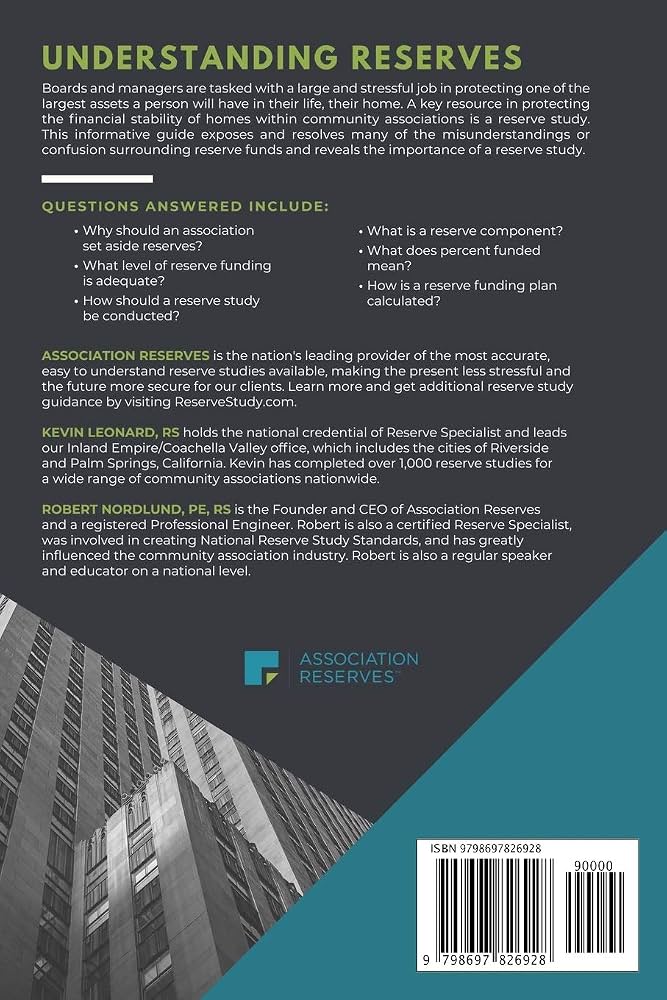


As an Amazon Associate, we may earn from qualifying purchases.
This inventory phase is tedious but critical. The cost of spending a few weeks getting this right is far lower than the cost of a $50,000 special assessment because the study missed a failing pool deck. Treat your Based Reserve Guide with the same rigor you would a legal contract.
Estimate remaining useful life
The second step in the Based Reserve Guide is estimating the remaining useful life (RUL) of each component. This is not a guess; it is a technical assessment of physical degradation. Professionals look at the current condition of an asset and project when it will reach the end of its functional life. For example, a roof that is ten years old with a twenty-year lifespan has ten years of RUL left. If the roof is already showing leaks, that timeline shortens.
Estimating RUL requires a site visit. You cannot determine the health of a pool pump or a driveway from a spreadsheet. A qualified reserve study provider inspects the components to assess wear and tear. The Community Association Institute (CAI) notes that professional providers undergo rigorous training to make these assessments accurately. Their expertise ensures that the data reflects the actual state of your property, not an idealized version.
Getting this step wrong is expensive. If you underestimate RUL, you will fund your reserves too aggressively, raising dues unnecessarily. If you overestimate it, you will face a shortfall. When reserves run dry, the HOA must levy a special assessment or take out a loan. Special assessments are unpopular and can be legally risky if they trigger defaults on homeowner loans. Accurate RUL estimation prevents these high-stakes financial shocks.
The goal is to align your contributions with the actual lifespan of your assets. By using professional data, you create a reliable Based Reserve Guide that protects the community’s financial health.
Calculate replacement costs using current market rates
A reserve study is only as good as the numbers behind it. If you estimate a roof replacement based on prices from five years ago, you aren’t planning—you’re gambling. When the shingles fail, the board will face a special assessment that catches homeowners off guard and erodes trust. The cost of failure here isn’t just financial; it’s legal and reputational.
To build a reliable Based Reserve Guide, you must anchor your projections in today’s hard costs. This means looking at current labor rates, material prices, and contractor availability in your specific region. Inflation doesn’t wait for your fiscal year to end, and neither do roofs or paving projects.
Start by gathering recent quotes from local vendors. Don’t rely on generic national averages, which often miss local labor premiums. Instead, contact at least three licensed contractors for each major component identified in your lifecycle analysis. Ask them to itemize labor and materials separately so you can track which costs are rising fastest.
Once you have baseline figures, apply a consistent inflation rate. The Kresge Foundation recommends using a conservative, long-term inflation model rather than chasing short-term market spikes. This ensures your reserve contributions remain steady and predictable, even when material costs fluctuate wildly.
Think of this process like building a financial shock absorber. If your calculations are grounded in real, current data, your HOA can absorb unexpected repairs without shocking the community with sudden fee hikes. If they are based on guesswork, every storm or equipment failure becomes a crisis.
Document every assumption. If you assume a 3% annual increase for concrete work, write that down. This transparency protects the board from accusations of mismanagement and helps homeowners understand why their dues are set at a certain level. Accurate cost estimation is the backbone of a healthy reserve fund.
Common mistakes in cost estimation
Board members often fall into the trap of using "ballpark" figures from online forums or outdated HOA websites. These sources rarely account for local building code changes, which can significantly increase costs. For example, new energy efficiency requirements might force you to upgrade insulation during a simple siding repair, doubling the expected price.
Another frequent error is ignoring the cost of project management. Major repairs require HOA staff or third-party managers to oversee contractors, handle permits, and ensure quality control. If your reserve study only covers the physical materials, you will run out of money before the work is even finished.
Finally, avoid delaying updates to your cost estimates. A reserve study should be updated annually, or at least every three years, to reflect current market conditions. Stale data is worse than no data because it creates a false sense of security until the bill comes due.
Key takeaways
Step 4: Set Monthly Contribution Levels
Now that you have your total projected costs from the reserve study, the next challenge is translating those large, infrequent numbers into manageable monthly dues. This is where the Based Reserve Guide becomes practical. You are essentially smoothing out the financial curve so that homeowners pay for repairs today rather than facing a massive bill tomorrow.
The goal is to find a balance between affordability and long-term solvency. If you set contributions too low, you risk deferred maintenance and eventual special assessments. If you set them too high, you create unnecessary financial strain on residents. The standard approach is to divide the annual reserve requirement by twelve.
Calculate the Base Monthly Amount
Start by taking the total annual reserve funding requirement identified in your study. Divide this figure by 12 to determine the base monthly contribution per unit. This number represents the pure reserve portion of the dues, separate from operating expenses like landscaping or utilities.
Account for Inflation and Growth
Reserve costs do not stay static. Materials and labor prices rise over time. When setting your contribution levels, ensure your funding plan accounts for inflation. Most reserve studies include a projected inflation rate. If you are using a cash flow projection, your monthly contribution might need to increase gradually over the 20-30 year horizon to keep pace with rising costs.
Review Affordability and Legal Risk
Compare your calculated monthly reserve contribution against what residents currently pay. A sudden jump in dues can trigger resistance or even legal challenges. However, keeping dues artificially low to avoid short-term pain is a high-stakes gamble. Underfunding reserves often leads to special assessments—lump-sum bills that can force homeowners to sell or refinance. As the Kresge Foundation notes, the principle of building reserves is to ensure organizations have provided for the inevitable need to reinvest in their assets. Avoiding these assessments is cheaper and less disruptive than reacting to them.
Finalize the Budget
Once you have locked in the monthly reserve amount, add it to your operating budget. This combined figure becomes your proposed annual budget for the upcoming fiscal year. Present this clearly to the board and homeowners, explaining that these contributions are not optional savings but essential maintenance costs.
Common Reserve Study Mistakes
A reserve study is only as good as the data behind it. When board members cut corners or rely on guesswork, the results are rarely pretty. The cost of failure here is steep: special assessments that shock homeowners, deferred maintenance that accelerates infrastructure decay, and potential legal liability for fiduciary breaches.
The most frequent error is ignoring deferred maintenance until it becomes a crisis. A proper Based Reserve Guide approach requires identifying every component’s remaining useful life and replacement cost. If you wait until a roof leaks or an elevator fails to update your schedule, the financial shock will be immediate and painful.
Another critical pitfall is using outdated cost data. Inflation and supply chain fluctuations mean that a cost estimate from three years ago is likely inaccurate today. Relying on stale numbers creates a false sense of security. Professional providers, such as those credentialed by the Community Associations Institute (CAI), use current pricing models to ensure your funding plan remains realistic.
Finally, many boards fail to update their studies regularly. A reserve study is not a one-time document; it is a living financial plan. Regular updates allow you to adjust contribution rates before a major component needs replacement. This proactive stance protects your community’s financial health and ensures that reserves are sufficient when the time comes.
Based Reserve Guide FAQ
HOA board members often face pressure to cut costs, but underfunding reserves invites special assessments and legal liability. This section answers common questions about the Based Reserve Guide standards, compliance, and timing to help you protect your community’s assets.
For detailed compliance standards, refer to the CAI Reserve Study Management Guide and the Reserve Study Guide.
No comments yet. Be the first to share your thoughts!